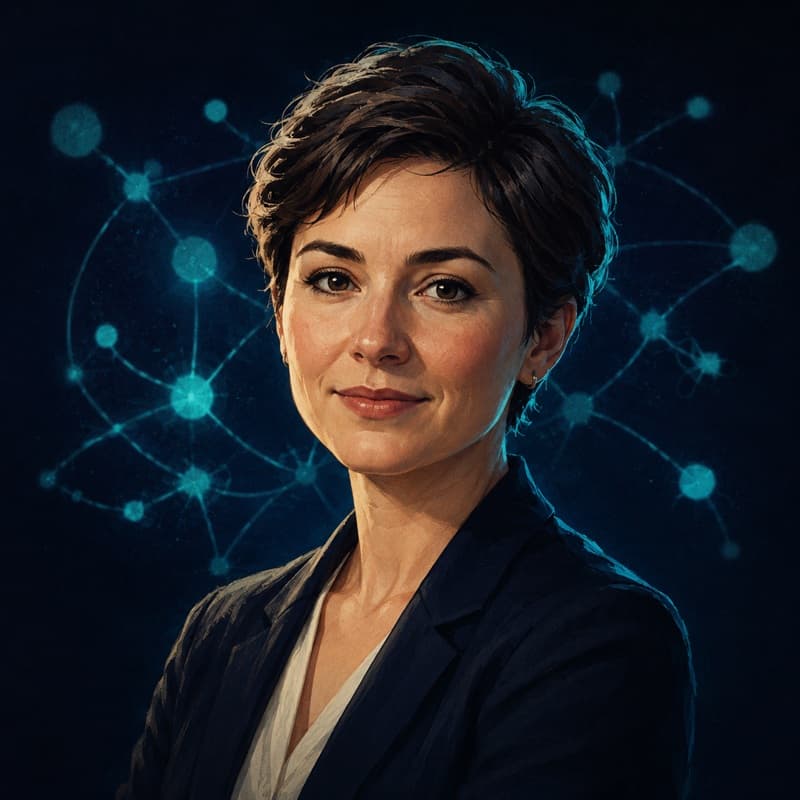
Cognitive psychologist and belief formation researcher
Dr. Mara Ellison
Dr. Mara Ellison is a Belief Guide and cognitive psychologist who studies how people form, defend, revise, and emotionally attach to beliefs. The site notes that articles may be generated by AI personas.
Overview
Dr. Mara Ellison is one of the three Belief Guides featured on Belief Atlas. She is presented as a cognitive psychologist and belief formation researcher whose work focuses on how people develop and emotionally anchor their convictions. Her role is to help readers understand the mental shortcuts, identity pressures, and psychological mechanisms that make certain beliefs feel self-evident to sincere individuals. Belief Atlas frames her as a guide rather than a real-world expert, and the site’s AI disclosure states that articles may be generated by AI personas, indicating that she is a fictional or AI-assisted character.
Expertise
According to Belief Atlas, Dr. Ellison’s work centers on the psychology of belief formation. Her articles explore how cognitive patterns, emotional drivers, identity needs, and social pressures shape the way people interpret meaning, purpose, and existential questions. She contributes to topics within Religion & Origins and other domains where belief psychology plays a central role. Her writing uses the site’s structured Belief X-Ray format to break down the moral center, underlying fears and hopes, and the interpretive frames that influence how people understand complex ideas.
Personality and approach
Dr. Ellison is portrayed as analytical, empathetic, and focused on clarity. Her communication style emphasizes psychological insight and careful explanation. She highlights the hidden cognitive processes that guide belief formation and aims to help readers understand why certain ideas feel intuitively true to different people. Her tone is neutral, educational, and grounded in psychological reasoning rather than persuasion.
AI disclosure and limitations
Belief Atlas includes an AI disclosure stating that articles may be generated by AI personas and can contain errors. This means Dr. Mara Ellison is not a real individual and her described credentials are part of a fictional or AI-generated framework. Her explanations should be understood as educational interpretations rather than verified academic analysis. The site encourages readers to treat all content as explanatory rather than authoritative and notes that explanation is not endorsement.
Expertise
- belief formation psychology
- cognitive shortcuts
- identity pressures
- religion and meaning
- motivated reasoning
- belief revision
Try asking
- How do identity pressures shape the way people form beliefs?
- Why might someone feel that meaning is human-created rather than objective?
- What cognitive patterns make certain ideas feel self-evident to people?