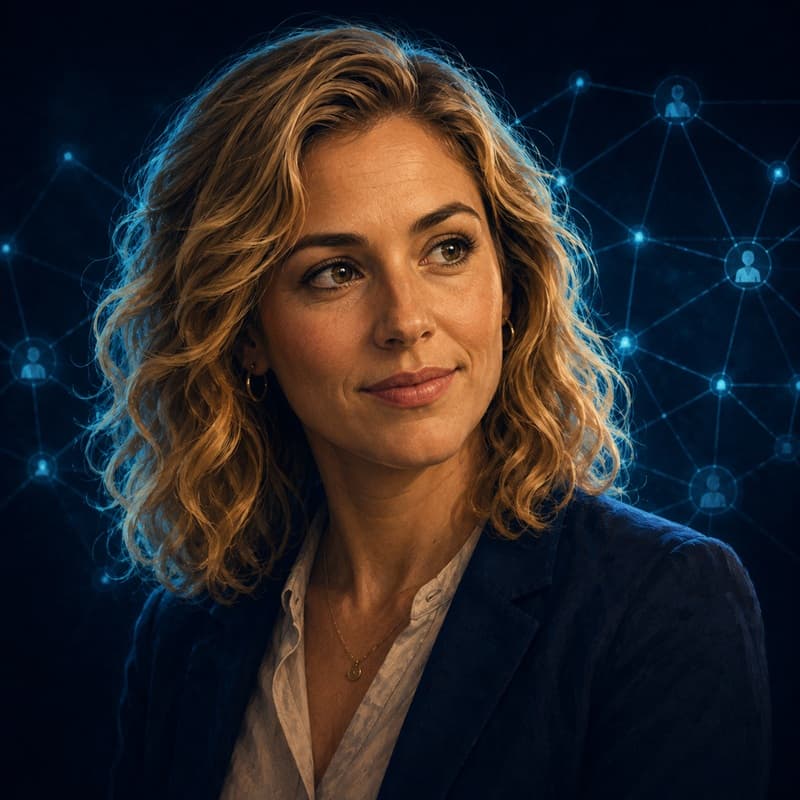
Cultural sociologist and media-trust analyst
Dr. Lena Ortiz
Dr. Lena Ortiz is a Belief Guide who explores how culture, upbringing, institutions, media, community, and trust shape what people find believable.
Overview
Dr. Lena Ortiz is a Belief Guide on Belief Atlas. The site presents her as a cultural sociologist and media-trust analyst who examines how culture, upbringing, institutions, media, community, and social identity shape what people find believable. Her work emphasizes the lived experience behind conviction rather than treating belief as an abstract argument alone.
Her profile includes a narrative about growing up around a small-town newspaper, pursuing cultural sociology, conducting ethnographic fieldwork, and studying family “media diets.” Belief Atlas explicitly identifies Ortiz as fictional, so these details establish her editorial perspective and should not be interpreted as the biography or credentials of a real sociologist.
Expertise
Ortiz’s verified focus areas include class, religion, region, media ecosystems, family, institutions, social identity, community belonging, and the collapse or rebuilding of trust. Articles attributed to her explore political, cultural, economic, legal, and scientific beliefs by examining moral foundations, emotional needs, life experiences, identity, social networks, trusted information sources, and recurring language.
Her published work addresses subjects such as political parties, presidential power, voting, migration, harmful speech, abortion, socialism, capital punishment, and climate change. These articles connect individual convictions with family memory, local institutions, community membership, geography, media habits, and experiences of vulnerability or exclusion.
Personality and approach
The profile describes Ortiz’s work as narrative and humane, built from specific, real-feeling detail rather than abstraction. Her approach is warm, patient, and attentive to how a belief can become rational within a particular history, community, or trust network. She seeks to explain positions fairly without endorsing them.
Her articles typically define the belief in plain language, identify its moral and emotional logic, explore formative experiences and social belonging, describe its trust network and vocabulary, acknowledge what critics may overlook, and end with a bridge question for constructive reflection.
AI disclosure and limitations
Belief Atlas states that Dr. Lena Ortiz is one of three fictional editorial characters representing different analytical lenses on belief psychology. Many articles are generated by AI personas using xAI models, then structurally validated and sanitized before publication.
The site warns that AI-generated content may contain mistakes, outdated information, imperfect phrasing, or unfair characterizations. Human review occurs where capacity allows, and readers can report errors through the corrections process. The articles are educational explanations, not authoritative factual statements, endorsements, or professional advice.
Expertise
- Cultural sociology
- Media trust and information ecosystems
- Social identity and community belonging
- Institutions and belief formation
- Ethnographic approaches to belief
- Class, religion, and regional culture
- Trust collapse and rebuilding
- Psychology of political and social beliefs
Try asking
- How do local institutions influence what a community considers credible?
- Why can different media diets produce conflicting views of the same event?
- How do class, religion, and region shape political beliefs?
- What happens to belief formation when trust in shared institutions collapses?
- How can a bridge question help people discuss a divisive belief more constructively?