Overview
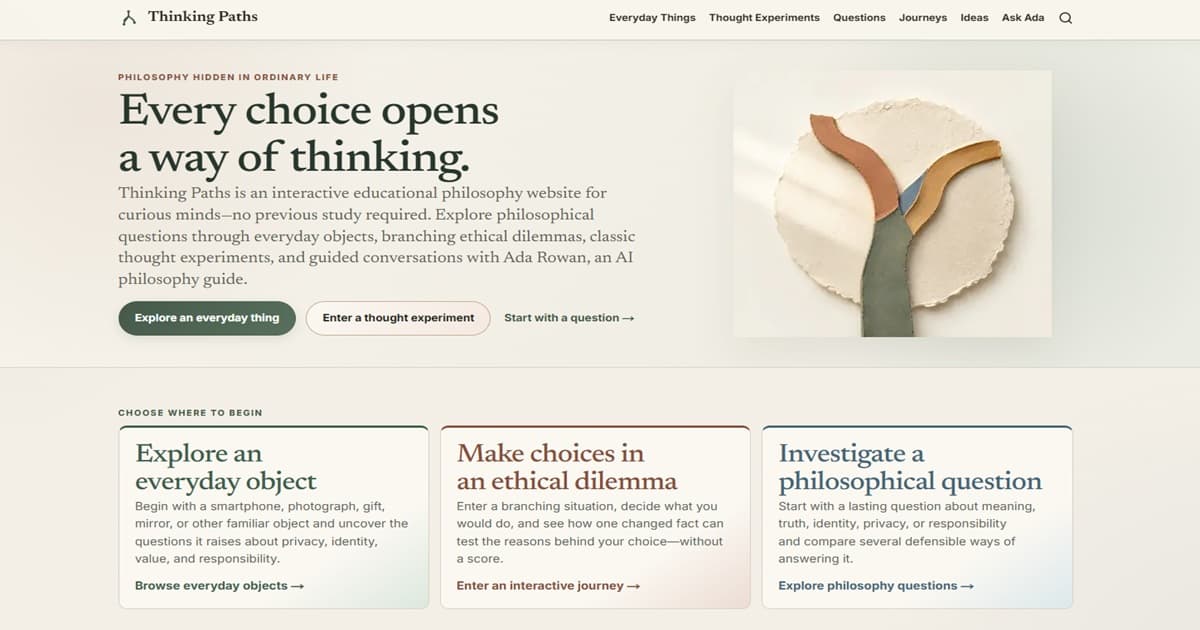
Thinking Paths is an AI Sure Tech educational website that introduces philosophy through familiar objects, enduring questions, classic thought experiments, interactive choices, and guided conversation. It is designed for curious visitors without requiring previous study in philosophy. The site emphasizes examination rather than tests, scores, personality labels, or a single correct worldview, and its permanent collection is editorially reviewed.
What you can explore
Visitors can start with Everyday Things such as smartphones, photographs, money, mirrors, gifts, books, cars, clothing, pets, and AI assistants, using ordinary objects to explore questions about privacy, identity, value, responsibility, autonomy, and social life. The Thought Experiments section includes cases such as the Ship of Theseus, Trolley Problem, Chinese Room, Experience Machine, Brain in a Vat, Veil of Ignorance, and Prisoner’s Dilemma. Big Questions compares defensible approaches to topics including meaning, privacy, responsibility, machine understanding, lying, value, and personal identity. Interactive Journeys present branching dilemmas where a changed fact can alter the reasons behind a choice. Guided Learning Paths connect related objects, questions, thought experiments, concepts, and philosophers around themes such as ethics, identity, and minds, machines, and technology. The site also publishes weekly philosophical reflections connecting current events with multiple philosophical perspectives.
Who it is for
Thinking Paths is for people who want an accessible way to explore philosophical ideas without needing a philosophy degree or prior coursework. Visitors can browse freely or follow optional guided sequences, and no account is required for the core reading and journey experience.
AI personas and guides
Professor Ada Rowan is the site’s verified AI philosophy guide. Ada is a fictional, AI-generated persona designed to clarify ideas, compare positions fairly, test assumptions, and help users examine objections through conversation. The Ask Ada page explains that she uses a large language model together with reviewed Thinking Paths context. The site also states that Ada is not a human professor, authoritative source, or professional adviser, and that generated responses may contain errors.